

Math can be intimidating. This is among the common things that I read in homeschooling pages and groups. But math can be fun! Here’s how we do our math sessions for our Kinder (and Grade 4).
What books we use
Since we are doing a Charlotte Mason method, we use Arithmetic for Young Children by Horace Grant and Everyday Number Stories by George Baker Longan, Emma Serl and Florence Ellege. These are living books (well written books in a narrative form).
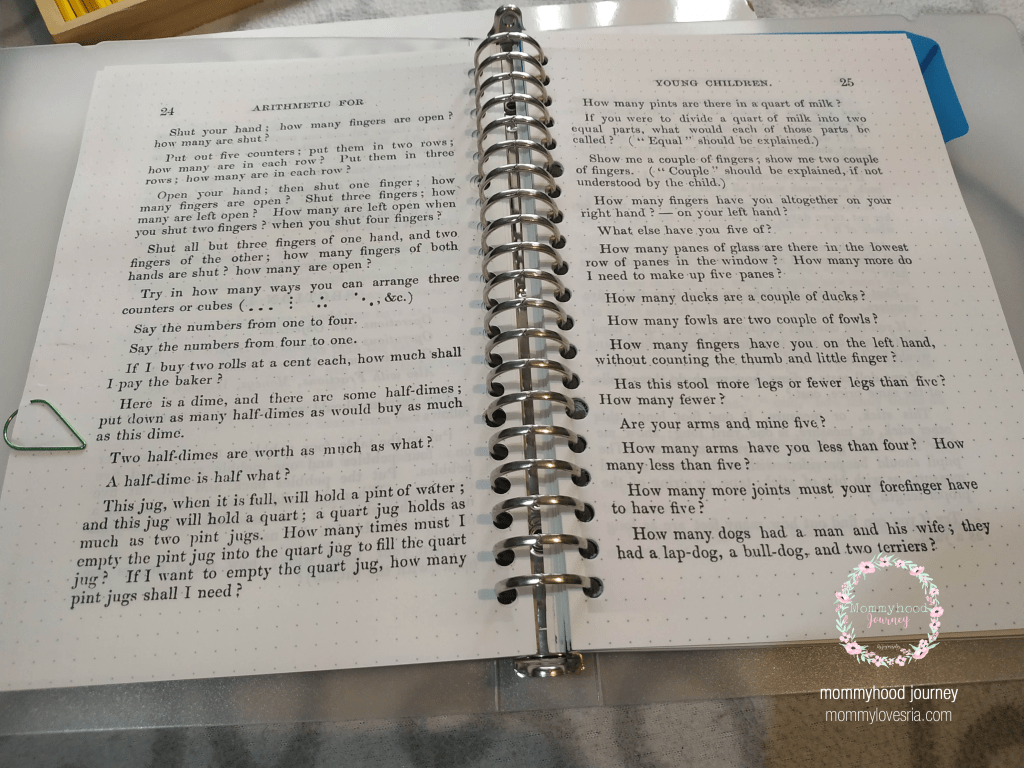

Every math session, I read the books and follow their instructions. Arithmetic for Young Children is very easy to follow but I need to change the money problems to Philippine Peso. Sometimes, the book will ask the child to clap, jump, tap, measure, count, etc. You can read the sample pages of this book above. Surprisingly, J remembers the concepts of our math lessons.
Manipulatives
It is a common practice to use manipulatives in teaching math. Manipulatives “provide concrete ways for students to bring meaning to abstract mathematical ideas” (Hand2mind). For our Kinder math, we use counters such as blocks, coins, sticks, and even fruits. It depends on my mood what manipulative to use. But J loves blocks, so most of the time, we use blocks.

My sister also gave J a math set last Christmas. It is very useful to us! The math set is composed of wooden sticks, wooden number blocks and wooden math symbols.
When we are doing addition, as much as possible, I ask him to use one color for each number (addend).

Practical lessons
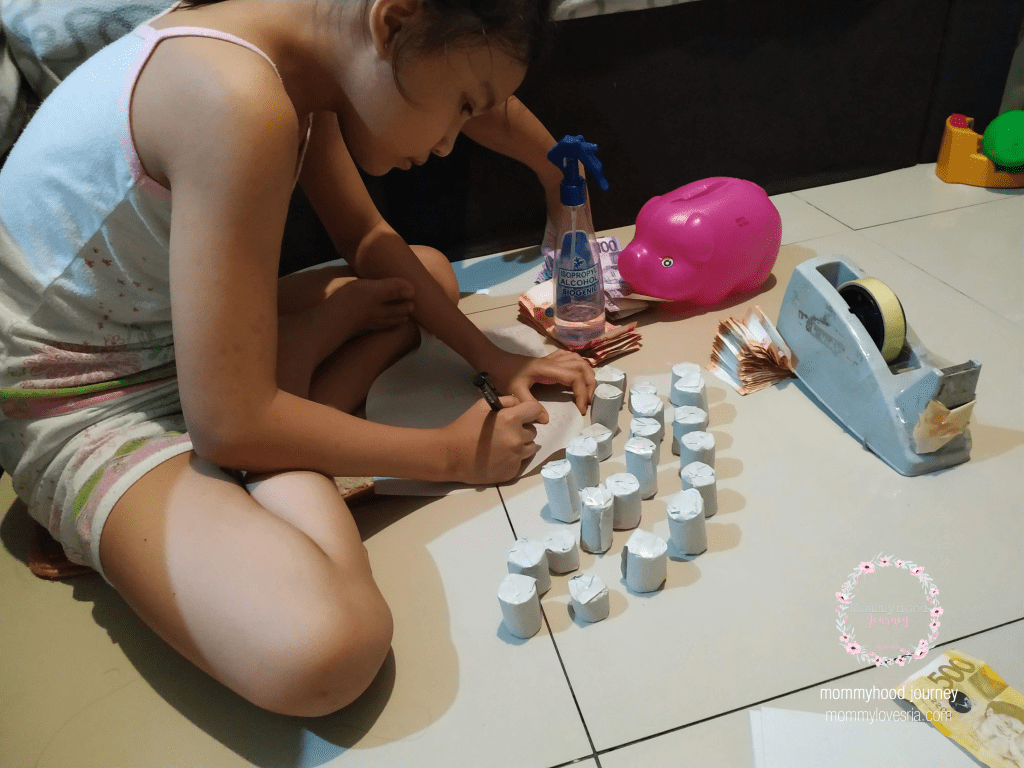
One time, I opened my piggy bank and the kids wanted to help. So I had this idea to do instant math lessons for them. For my Kinder, I asked him to count the bills and to add the coins. I also showed that a 5-Peso coin is equivalent to five pieces of 1-Peso coins.
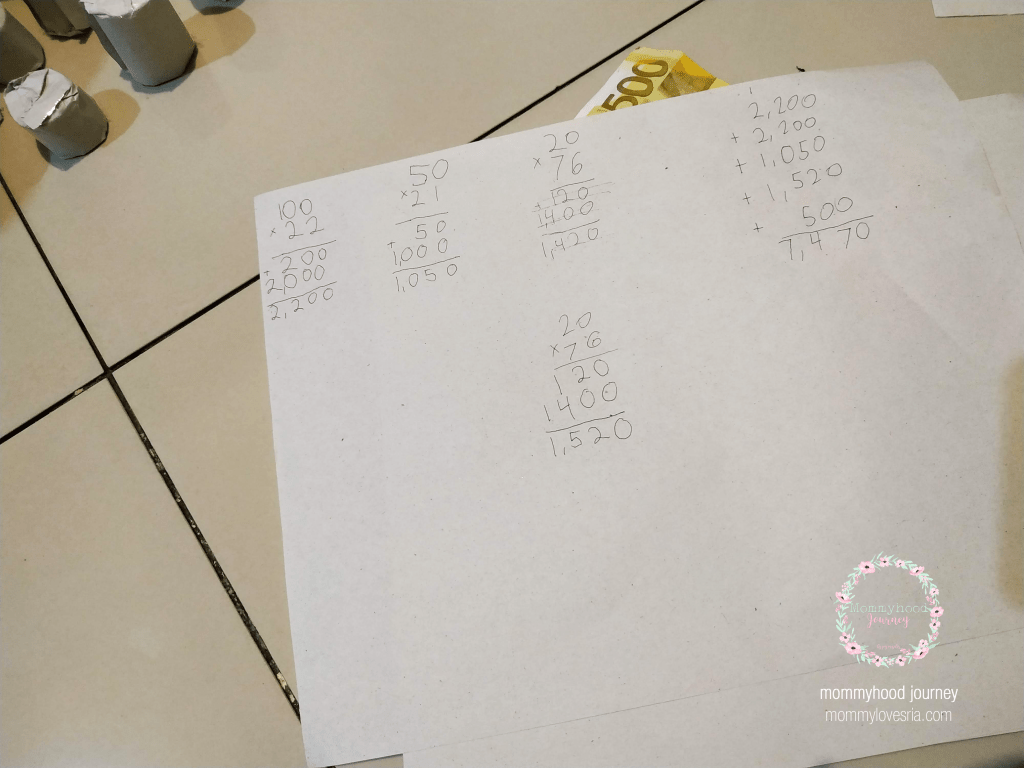
For my Grade 4 kid, I asked her to multiply the number of bills by the bill value manually.
Written Math
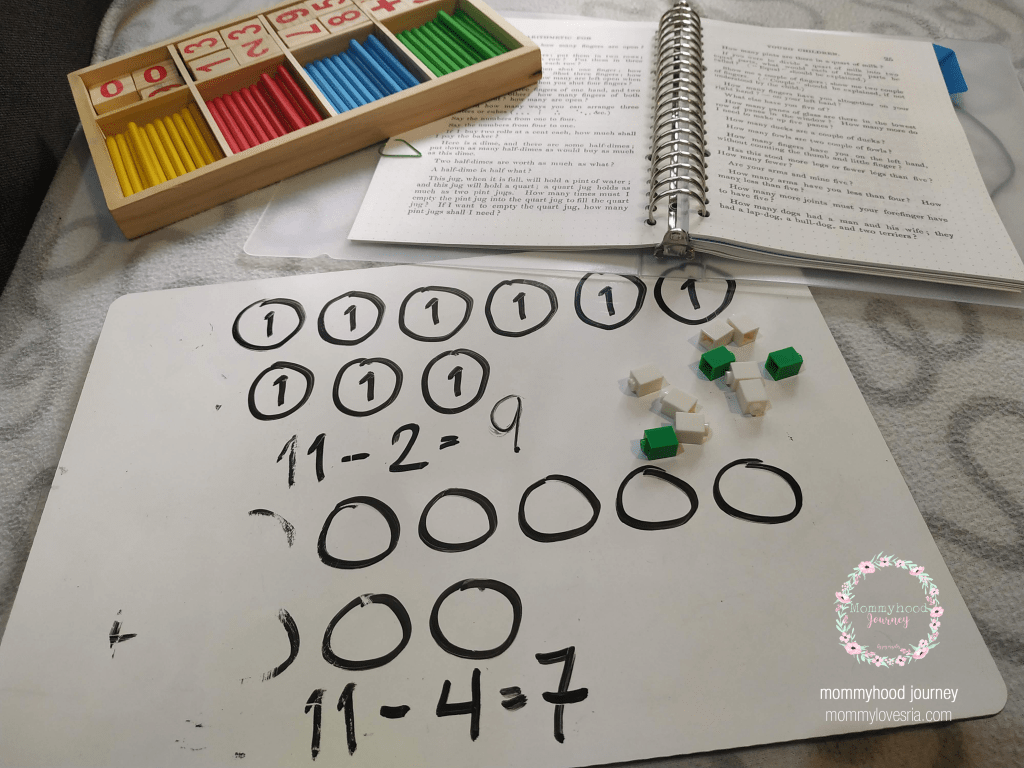
Some of our math lessons are in written format. We have small whiteboards (you can use slate if that’s what you have) where J solves his math problems for the day. For subtraction, I let him erase the subtrahend (the number to be subtracted). Lately, I also ask him to write the answers. He loves writing on the whiteboard so I have no problem with that. 🙂
Today, he learned that three one-foot ruler are as long as one yard. He measured the table, doors and chair using my tape measure (if they are one-yard long or not).
In homeschooling, lessons are limitless. Your only limit is your imagination. 🙂
 Mommyhood Journey